Author: 7djwqu5s0goe

  • rclone-rc

    rclone-rc

    A fully type-safe TypeScript API client for Rclone’s Remote Control (RC) interface, powered by @ts-rest and Zod.

    Tested with Rclone v1.70.0

    ⚠️ Work in Progress

    This library is currently under active development. Check out the current status for a list of implemented commands.

    Consider contributing if you need a specific command:

    1. Check src/api/index.ts for current implementation
    2. Add your needed command following the same pattern
    3. Open a Pull Request

    ✨ Features

    • 🔒 Fully Type-Safe: End-to-end type safety for all API calls, including async operations
    • 📄 OpenAPI Support: Generated spec for integration with any language/client
    • 🧩 Framework Agnostic: Works with any fetch client
    • 🚀 Async Operations: First-class support for Rclone’s async operations
    • ✅ Runtime Validation: Uses Zod to validate types at runtime
    • 💪 HTTP Status Handling: Error responses handled through typed status codes

    Installation

    # Using npm
    npm install rclone-rc
    
    # Using yarn
    yarn add rclone-rc
    
    # Using pnpm
    pnpm add rclone-rc

    Usage

    Basic Client

    import { createClient } from 'rclone-rc';
    
    const api = createClient({
      baseUrl: 'http://localhost:5572',
      username: 'your-username', // Optional if running with --rc-no-auth
      password: 'your-password', // Optional if running with --rc-no-auth
    });
    
    try {
      // Get rclone version with typed response
      const { status, body } = await api.version();
    
      if (status === 200) {
        console.log('Rclone version:', body.version); // typed
      } else if (status === 500) {
        console.log('Error:', body.error); // also typed
      }
    
      // List files with type-safe parameters and response
      const files = await api.list({
        body: { fs: 'remote:path', remote: '' }
      });
    
      if (files.status === 200) {
        console.log('Files:', files.body.list);
      }
    } catch (error) {
      // Only network errors will throw exceptions
      console.error('Network error:', error);
    }

    Error Handling

    This library handles errors in two ways:

    1. HTTP Status Errors: Returned as typed responses with appropriate status codes
    2. Network Errors: Thrown as exceptions when server is unreachable

    Async Operations

    For long-running operations:

    import { createClient, createAsyncClient } from 'rclone-rc';
    
    const api = createClient({ baseUrl: 'http://localhost:5572' });
    const asyncApi = createAsyncClient({ baseUrl: 'http://localhost:5572' });
    
    try {
      // Start async job
      const job = await asyncApi.list({
        body: {
          fs: 'remote:path',
          remote: '',
          _async: true, // You need to pass this flag to the async client
        }
      });
    
      // Access job ID and check status
      const jobId = job.body.jobid;
      // Check job status using the non-async client
      const status = await api.jobStatus({ body: { jobid: jobId } });
    
      if (status.status === 200 && status.body.finished) {
        console.log('Job output:', status.body.output);
      }
    } catch (error) {
      console.error('Network error:', error);
    }

    Runtime Type Validation

    Zod validates both request and response types at runtime:

    • Request validation: Parameters, body, and query are validated before sending
    • Response validation: Can be disabled with validateResponse: false in client options

      const api = createClient({
        baseUrl: 'http://localhost:5572',
        validateResponse: false, // true by default
      });

    OpenAPI Integration

    Generate an OpenAPI specification for use with other languages and tools:

    import { generateOpenApi } from '@ts-rest/open-api';
    import { rcloneContract } from 'rclone-rc';
    
    const openApiDocument = generateOpenApi(rcloneContract, {
      info: { title: 'Rclone RC API', version: '1.0.0' }
    });

    Access the raw OpenAPI specifications at:

    Development

    pnpm install     # Install dependencies
    pnpm build       # Build the project
    pnpm test        # Run tests
    pnpm lint        # Lint code
    pnpm format      # Format code
    pnpm openapi     # Generate OpenAPI spec

    Requirements

    • Node.js 18+
    • TypeScript 5.0+

    License

    MIT

    Visit original content creator repository

  • FAST_Anime_VSR

    FAST Anime VSRR (Video Super-Resolution and Restoration)

    This repository is dedicated to enhancing the Super-Resolution (SR) inference process for Anime videos by fully harnessing the potential of your GPU. It is built upon the foundations of Real-CuGAN (https://github.com/bilibili/ailab/blob/main/Real-CUGAN/README_EN.md) and Real-ESRGAN (https://github.com/xinntao/Real-ESRGAN).

    I’ve implemented the SR process using TensorRT, incorporating a custom frame division algorithm designed to accelerate it. This algorithm includes a video redundancy jump mechanism, akin to video compression Inter-Prediction, and a momentum mechanism.

    Additionally, I’ve employed FFMPEG to decode the video at a reduced frames-per-second (FPS) rate, facilitating faster processing with an almost imperceptible drop in quality. To further optimize performance, I’ve utilized both multiprocessing and multithreading techniques to fully utilize all available computational resources.

    For a more detailed understanding of the implementation and algorithms used, I invite you to refer to this presentation slide: https://docs.google.com/presentation/d/1Gxux9MdWxwpnT4nDZln8Ip_MeqalrkBesX34FVupm2A/edit#slide=id.p.

    In my 3060Ti Desktop version, it can process in Real-Time on 480P Anime videos input (Real-CUGAN), which means that as soon as you finish watching one Anime video, the second Anime Super-Resolution (SR) video is already processed and ready for you to continue watching with just a simple click..

    Currently, this repository supports Real-CUGAN (official) and a shallow Real-ESRGAN (6 blocks Anime Image version RRDB-Net provided by Real-ESRGAN).

      
    My ultimate goal is to directly utilize decode information in Video Codec as in this paper (https://arxiv.org/abs/1603.08968), so I use the word “FAST” at the beginning. Though this repository can already process in real-time, this repository will be continuously maintained and developed.

    If you like this repository, you can give me a star (if you are willing). Feel free to report any problem to me.   
      

    Visual Improvement (Real-CUGAN)

    Before:
    compare1

    After 2X scaling:
    compare2   
      

    Model supported now:

    1. Real-CUGAN: The original model weight provided by BiliBili (from https://github.com/bilibili/ailab/tree/main)
    2. Real-ESRGAN: Using Anime version RRDB with 6 Blocks (full model has 23 blocks) (from https://github.com/xinntao/Real-ESRGAN/blob/master/docs/model_zoo.md#for-anime-images–illustrations)
    3. VCISR: A model I trained with my upcoming paper methods using Anime training datasets (https://github.com/Kiteretsu77/VCISR-official)

    Supported Devices and Python Version:

    1. Nvidia GPU with Cuda (Tested: 2060 Super, 3060Ti, 3090Ti, 4090)
    2. Tested on Python 3.10   
        

    Installation (Linux – Ubuntu):

    Skip step 3 and 4 if you don’t want tensorrt, but they can increase the speed a lot & save a lot of GPU memory.

    1. Install CUDA. The following is how I install:

      • My Nvidia Driver in Ubuntu is installed by Software & Updates of Ubuntu (Nvidia server driver 525), and the cuda version in nvidia-smi is 12.0 in default, which is the driver API.
      • Next, I install cuda from the official website (https://developer.nvidia.com/cuda-12-0-0-download-archive?target_os=Linux&target_arch=x86_64&Distribution=Ubuntu&target_version=22.04&target_type=runfile_local). I install 12.0 version because it’s said that the runtime API should be older than driver API cuda (12.0 in nvidia-smi). I use runfile(local) to install because that is the easiest option.
        During the installation, Leave driver installation ([] Driver [] 525.65.01) blank. Avoid dual driver installation.
      • After finishing the cuda installation, we need to add their path to the environment
            gedit ~/.bashrc
            // Add the following two at the end of the popped up file (The path may be different, please double check)
            export PATH=/usr/local/cuda-12.0/bin${PATH:+:${PATH}}
            export LD_LIBRARY_PATH=/usr/local/cuda-12.0/lib64${LD_LIBRARY_PATH:+:${LD_LIBRARY_PATH}}
            // Save the file and execute the following in the terminal
            source ~/.bashrc
      • You should be capable to run “nvcc –version” to know that cuda is fully installed.
    2. Install CuDNN. The following is how I install:

    3. Install tensorrt

      • Download tensorrt 8.6 from https://developer.nvidia.com/nvidia-tensorrt-8x-download (12.0 Tar pacakge is preferred)
      • Follow https://docs.nvidia.com/deeplearning/tensorrt/install-guide/index.html#installing-tar to install several wheels.
        Step4 of this website is like below (Don’t forget to replace YOUR_USERNAME to your home address):
            gedit ~/.bashrc
            // Add the following at the end of the popped up file (The path may be different, please double check)
            export LD_LIBRARY_PATH=/home/YOUR_USERNAME/TensorRT-8.6.1.6/lib${LD_LIBRARY_PATH:+:${LD_LIBRARY_PATH}}
            // Save the file and execute the following in the terminal
            source ~/.bashrc
      • After finishing these steps, you should be able to “import tensorrt” in python (starts a new window to run this)
    4. Install torch2trt (Don’t directly use pip install torch2trt)

    5. Install basic libraries for python

          pip install -r requirements.txt

    Installation (Windows):

    Skip step 3 and 4 if you don’t want tensorrt, but they can increase the speed a lot & save a lot of GPU memory.

    1. Install CUDA (e.g. https://developer.nvidia.com/cuda-downloads?)

    2. Install Cudnn (move bin\ & include\ & lib\ so far is enough)

    3. Install tensorrt (Don’t directly use python install)

    4. Install torch2trt (Don’t directly use pip install torch2trt)

    5. Install basic libraries for python

          pip install -r requirements.txt

    Run (Inference):

    1. Adjust config.py to setup your setting. Usually, just editing Frequently Edited Setting part is enough. Please follow the instructions there.

      • Edit process_num, full_model_num, nt to match your GPU’s computation power.
      • The input (inp_path) can be a single video input or a folder with a bunch of videos (video format can be various as long as they are supported by ffmpeg); The output is mp4 format in default.
    2. Run

           python main.py
      • The original cunet weight should be automatically downloaded and tensorrt transformed weight should be generated automatically based on the video input height and weight.
      • Usually, if this is the first time you transform to a tensorrt weight, it may need to wait for a while for the program to generate tensorrt weight.
      • If the input source has any external subtitle, it will also be extracted automatically and sealed back to the processed video at the end.   
          

    Future Works:

    1. Debug use without TensorRT && when full_model_num=0
    2. MultiGPU inference support
    3. Provide PSNR && Visual Quality report in README.md
    4. Provide all repositories in English.
    5. Record a video on how to install TensorRT from scratch.   
        

    Disclaimer:

    1. The sample image under tensorrt_weight_generator is just for faster implementation, I don’t have a copyright for that one. All rights are reserved to their original owners.
    2. My code is developed from Real-CUGAN github repository (https://github.com/bilibili/ailab/tree/main/Real-CUGAN)
    Visit original content creator repository
  • chaos-dispensary

    chaos-dispensary Actions Status

    A web service that dispenses random numbers built from

    Base Docker Image

    Debian bullseye-slim (x64)

    Get the image from Docker Hub or build it yourself

    docker pull fullaxx/chaos-dispensary
    docker build -t="fullaxx/chaos-dispensary" github.com/Fullaxx/chaos-dispensary
    

    Configuration Options

    Adjust chaos2redis to pin long_spin() and time_spin() to the same thread
    Default: long_spin() and time_spin() will each spin their own thread

    -e SAVEACORE=1
    

    Adjust chaos2redis to acquire 6 blocks of chaos per thread before transmutation
    Default: 4 blocks of chaos per thread

    -e CHAOS=6
    

    Adjust chaos2redis to use 2 hashing cores for chaos transmutation
    Default: 1 hashing core

    -e CORES=2
    

    Adjust chaos2redis to keep 25 lists of 999999 random numbers in redis
    Default: 10 lists of 100000 random numbers each

    -e LISTS=25 -e LSIZE=999999
    

    Launch chaos-dispensary docker container

    Run chaos-dispensary binding to 172.17.0.1:80 using default configuration

    docker run -d -p 172.17.0.1:80:8080 fullaxx/chaos-dispensary
    

    Run chaos-dispensary binding to 172.17.0.1:80 using a conservative configuration

    docker run -d -e SAVEACORE=1 -e CHAOS=2 -p 172.17.0.1:80:8080 fullaxx/chaos-dispensary
    

    Run chaos-dispensary binding to 172.17.0.1:80 using a multi-core configuration

    docker run -d -e CORES=4 -p 172.17.0.1:80:8080 fullaxx/chaos-dispensary
    

    Using curl to retrieve random numbers

    By default the output will be a space delimited string of numbers.
    If the header Accept: application/json is sent, the output will be json.
    Get 1 number from the dispensary:

    curl http://172.17.0.1:8080/chaos/1
    curl -H "Accept: application/json" http://172.17.0.1:8080/chaos/1
    

    Get 10 numbers from the dispensary:

    curl http://172.17.0.1:8080/chaos/10
    curl -H "Accept: application/json" http://172.17.0.1:8080/chaos/10
    

    Get 99999 numbers from the dispensary:

    curl http://172.17.0.1:8080/chaos/99999
    curl -H "Accept: application/json" http://172.17.0.1:8080/chaos/99999
    

    Using curl to check status

    The status node consists of two values.
    Chaos/s is the amount of chaos pouches that we’re processing per second.
    Numbers/s is the amount of random numbers we’re generating per second.

    curl http://172.17.0.1:8080/status/
    curl -H "Accept: application/json" http://172.17.0.1:8080/status/
    

    Visit original content creator repository

  • ask

    ask

    The ask program prompts the user and accepts a single-key response.

    Usage:

    ask [options] “prompt string” responses

    The options can appear anywhere on the command line.

    Options Description
    -c, -C, –case-sensitive Case-sensitive response matching
    -h, -H, –help Show this help screen


    The “prompt string” and responses are positional parameters. They must be in order.

    Positional Parameter Description
    “prompt string” The prompt string the user sees
    responses The characters the user is allowed to press to answer the prompt (Not a comma-separated list.)


    Return value:

    System Exit Code Meaning
    0 The user entered a response that was not in the allowed responses.
    1-125 The index of the user’s choice in the responses. (The first response is 1, the next is 2, and so on.)
    126 The user pressed Enter without making a choice
    127 The user pressed Escape

    System Exit Code: In an sh-compatible shell, you check the ?* variable.
    In a batch file you check the ERRORLEVEL.
    Other shells may be different.

    Usage Notes:

    • The user must press Enter after pressing a key.
    • The response is not case-sensitive by default. Use -c if case-sensitive mode is necessary.
    • If the user presses more than one key, the first key will be used. The user can use the keyboard to edit their response.
    • The escape sequences \, \a, \n, \r, and \t are allowed in the prompt string.

    Example:

    ask “** Answer [Y]es, [N]o, or [M]aybe: ” YNM

    The example displays the following prompt, and reads the user’s response:

    ** Answer [Y]es, [N]o, or [M]aybe:

    The example returns:

    • Exit code 1 if the user pressed y or Y.
    • Exit code 2 if the user pressed n or N.
    • Exit code 3 if the user pressed m or M.
    • Exit code 0 if the user pressed a key that was not y, Y, n, N, m, or M.
    • Exit code 126 if the user pressed Enter without pressing a key.
    • Exit code 127 if the user pressed Escape.


    Programming Notes

    You can include the ask_funcs.h header and link the ask_funcs.o module to your own C/C++ programs. This provides your programs the same functionality used by the ask program.

    It uses standard C library functions for I/O. It uses the standard putchar() function to print the prompt string to stdout, and the standard getchar() function to read the response character from stdin.

    Functions

    The ask_funcs module provides the following public functions:

    void set_default_options();
    void set_case_sensitive_mode(int value);
    int ask(char *prompt, char *response_list);
    

    void set_default_options();

    • The set_default_options function simply sets the default case_sensitive mode option to OFF (0).

    void set_case_sensitive_mode(int value);

    • The set_case_sensitive_mode function lets you turn the case sensitive mode ON (non-zero) or OFF (0).

    int ask(char *prompt, char *responses);

    • The ask function lets you prompt the user, specifying the prompt string and the response characters, and then receive the response code.
    • The return value from the ask function is the same as the system exit codes described for the ask program.

    Visit original content creator repository

  • Mitten

    Mitten

    Mitten is a Python script designed to monitor GitHub repositories for new commits and send notifications to a specified Discord channel. The script leverages the GitHub API to fetch commit information and Discord Webhooks to post notifications.

    Features

    • Fetches commits from specified GitHub repositories.
    • Sends commit notifications to Discord with detailed commit information.
    • Ability to mention specified roles in commit notifications.
    • Supports selecting specific branches from each repository.
    • Logs commit information locally to avoid duplicate notifications.
    • Fetches commits pushed since the last runtime of the script, ensuring that commits pushed during downtime are still fetched in the next run.
    • Configurable through environment variables.

    Requirements

    • Python 3.7+
    • requests library
    • python-dotenv library

    Configuration

    Create a ‘.env‘ file in the same directory as the script with the following variables:

    • REPOS: A comma-separated list of repositories to monitor. You can also optionally specify a branch for each repo by adding ‘:branch_name’ (e.g., ‘owner/repo1,owner/repo1:dev_branch,owner/repo2‘).
    • DISCORD_WEBHOOK_URL: The Discord webhook URL where notifications will be sent.
    • GITHUB_TOKEN: (Optional but highly recommended) Your GitHub API token to avoid rate limiting. Learn more about creating a personal access token here.
    • CHECK_INTERVAL: The interval (in seconds) at which the script checks for new commits. Make sure this value exceeds the number of repos to monitor.
    • DISCORD_EMBED_COLOR: (Optional) The color of the commit embeds sent to Discord. The color must be provided in hexadecimal format using the prefix ‘0x’ (e.g., ‘0xffffff’).
    • ROLES_TO_MENTION: (Optional) The role IDs (NOT role name, but the corresponding 19 digit role ID) to mention in Discord when a new commit is detected. Separate each role ID with a comma. You can also ping @everyone by simply setting this to ‘@everyone’.
    • WEBHOOKS_ON_REPO_INIT: Choose whether to send a message to Discord whenever a new repository is initialized.
    • PREFER_AUTHOR_IN_TITLE: Preference for title style in commit messages. If set to True, the commit author’s username and avatar will be used in the title of the embed. If set to False, the repo name and the repo owner’s avatar will be used.
    • TEST_WEBHOOK_CONNECTION: Send a test message to Discord when the script is started.

    Installation

    1. Clone the repository:

      git clone https://github.com/joobert/mitten.git
      cd mitten
    2. Install dependencies:

      pip install -r requirements.txt
    3. Create a .env file with the following content:

      REPOS=owner/repo1,owner/repo1:dev_branch,owner/repo2,owner/repo3
      DISCORD_WEBHOOK_URL=your_webhook_url
      GITHUB_TOKEN=your_github_token
      CHECK_INTERVAL=60
      DISCORD_EMBED_COLOR=
      ROLES_TO_MENTION=
      WEBHOOKS_ON_REPO_INIT=True
      PREFER_AUTHOR_IN_TITLE=False
      TEST_WEBHOOK_CONNECTION=False
    4. Run the script:

      python mitten.py

    (Optional) Running with Docker

    Ensure you have both Docker and Docker Compose installed on your machine.

    1. Clone the repository:

      git clone https://github.com/joobert/mitten.git
      cd mitten
    2. Create a .env file with the following content:

      REPOS=owner/repo1,owner/repo1:dev_branch,owner/repo2,owner/repo3
      DISCORD_WEBHOOK_URL=your_webhook_url
      GITHUB_TOKEN=your_github_token
      CHECK_INTERVAL=60
      DISCORD_EMBED_COLOR=
      ROLES_TO_MENTION=
      WEBHOOKS_ON_REPO_INIT=True
      PREFER_AUTHOR_IN_TITLE=False
      TEST_WEBHOOK_CONNECTION=False
    3. Create empty commit_log.json and mitten_logs.txt files:

      touch commit_log.json mitten_logs.txt
    4. Start the service with Docker Compose:

      docker compose up -d

    Important Notes

    • Initial Run: On the first run (and for each subsequent repository added down the line), Mitten will initialize each repository by fetching its entire commit history to avoid spamming notifications and fetch commits pushed during the script’s downtime on the next run. This process can be API heavy and time-consuming for large repositories, but only needs to be done once per repository.

    • GitHub Token: It is highly recommended to set a GitHub API token to avoid API rate limiting issues. Without the token, you will be limited to 60 requests per hour, which might not be sufficient for monitoring multiple repositories, nor sufficient for the initial run of a large repository. Setting the token increases this limit significantly (5000 requests per hour) ensuring you won’t run into issues.

    • Logging: Mitten creates and logs commit information locally in a file named ‘commit_log.json‘ to ensure that no duplicate notifications are sent. The script also saves its runtime logs to a file named ‘mitten_logs.txt‘. Both of these should be kept in the same directory as the script.

    Contributing

    Contributions are welcome! Please feel free to submit a Pull Request or open an Issue.

    License

    MIT

    Visit original content creator repository

  • travel-buddy

    App Screenshot

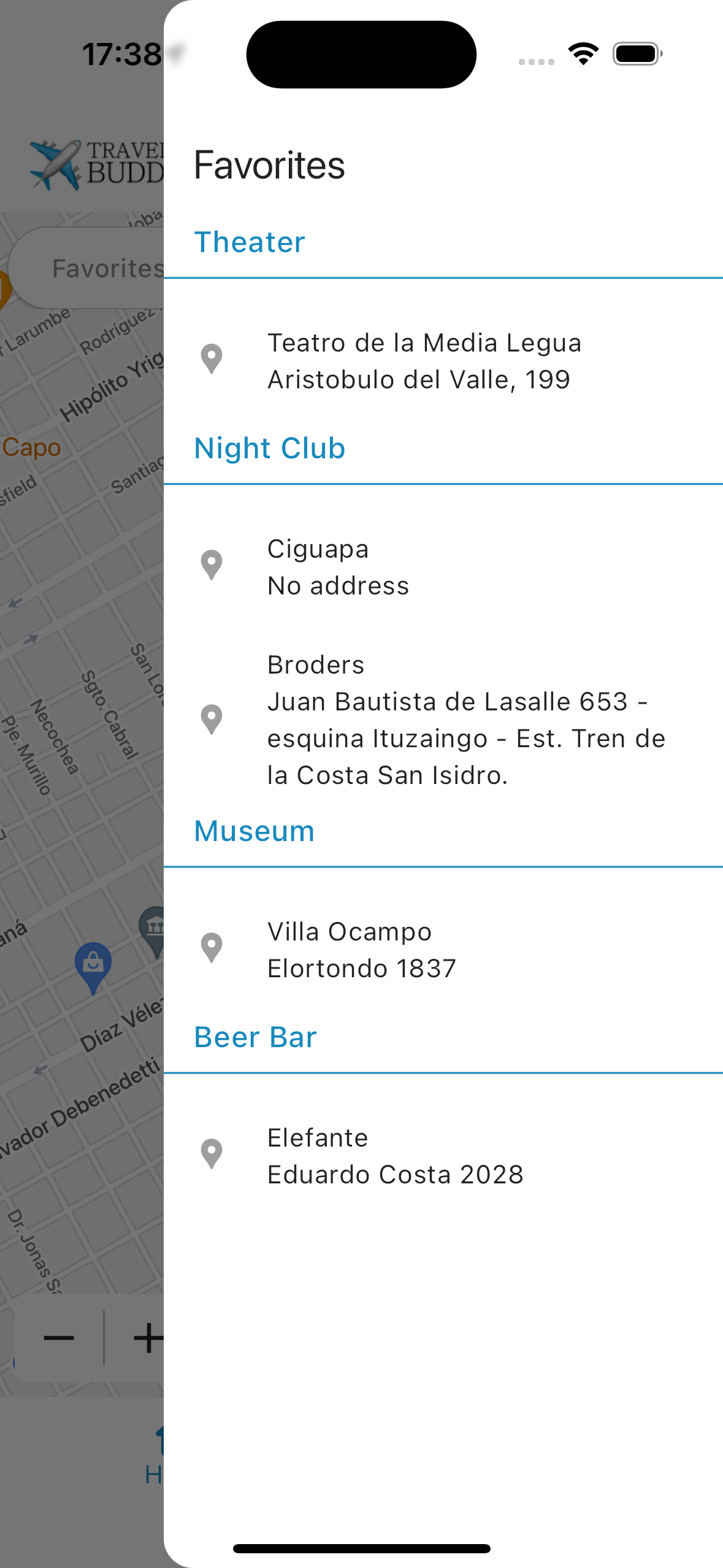
    Travel Buddy is a Flutter app that helps users explore and mark locations on a Google Map based on Foursquare categories. The app integrates Firebase Authentication for user management and Cloud Firestore for storing user-specific favorites.

    Features

    • User Authentication: Users can sign up and sign in using Firebase Authentication.
    • Google Map Integration: Users can view a Google Map and mark locations based on Foursquare categories.
    • Foursquare Places API: The app fetches places data from the Foursquare API to display options on the map.
    • Favorites Management: Users can save marked locations as favorites, which are stored in Firebase Cloud Firestore and are specific to each authenticated user.
    • State Management: Utilizes various state management solutions:
      • BLoC for authentication and Foursquare connections.
      • GetX for accessing Foursquare place details.
      • A singleton pattern for managing Firebase connections and retrieving the user’s favorites.
    App Screenshot

    Technologies Used

    • Flutter: SDK version >=3.1.0 <4.0.0
    • Firebase: Firebase Authentication and Cloud Firestore.
    • Google Maps: For displaying locations.
    • Foursquare API: For accessing place data.
    • State Management: BLoC, GetX, Singleton, Stateful widget.

    Getting Started

    Prerequisites

    • Flutter SDK installed (version >=3.1.0 <4.0.0)
    • Dart SDK
    • Firebase account
    • Foursquare API key

    Installation

    1. Clone the repository:

      git clone https://github.com/belenyb/travel_buddy.git
      cd travel_buddy
    2. Install the dependencies:

      flutter pub get
    3. Configure Firebase:

    • Create a Firebase project in the Firebase Console.
    • Add your Flutter app to the project.
    • Download the google-services.json (for Android) and/or GoogleService-Info.plist (for iOS) files and place them in the appropriate directories:
      • Android: android/app/
      • iOS: ios/Runner/
    1. Set up Foursquare API:
    • Sign up for a Foursquare developer account and create a new app to obtain your API key.
    • Create an .env file with your Foursquare API key and place it on the root of your project.
    1. Run the app:
      flutter run
    App Screenshot

    Usage

    Sign Up / Sign In

    Launch the app and create a new account or sign in to your existing account.

    Explore Locations

    Use the Google Map interface to explore nearby locations categorized by Foursquare.

    Mark Favorites

    Tap on a location to mark it as a favorite. Your favorites are saved and can be accessed later.

    App Screenshot

    Visit original content creator repository
  • react-legra

    react-legra

    Draw LEGO like brick shapes using legraJS and Reactjs

    NPM JavaScript Style Guide

    react-legra provides a wrap around the common components of legraJS

    Install

    npm install --save react-legra
    
    // or
    
    yarn add react-legra

    Usage

    To start drawing, you first need to create a canvas to draw on, the <Board /> component will do that for you.

    The <Board /> component recieve the same props as a canvas element, and additionally you can set the canvas prop, to reference all the drawing to an external canvas

    All the components but <Board />, recieve (optionally) some configuration props:

    options: { // To control the look and feel of the component
      filled?: false,
      color?: blue
    },
    bs: 24 // Brick size, default to 24
    import React from 'react'
    import Board, { Line } from 'react-legra'
    
    function MyComponent() {
    
      return (
        <Board>
          <Line from={[3, 3]} to={[10, 10]} />
          // or
          // <Board.Line from={[5, 0]} to={[10, 10]} />
        </Board>
      )
    }

    Components


    <Line />

    Draw a line from (x1, y1) to (x2, y2)

    prop type default
    from (required) Array[x1, y1]
    to (required) Array[x2, y2]

    line

    import Board, { Line } from 'react-legra'
    
    function MyComponent() {
    
      return (
        <Board>
          <Line from={[1, 1]} to={[3, 3]} options={{ color: 'green' }} />
        </Board>
      )
    }

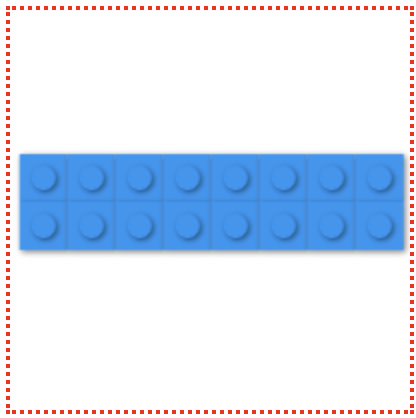
    <Rectangle />

    Draw a rectangle given the top-left coordenates [x, y] (start) as the center point and with the specified width and height

    prop type default
    start (required) Array[x, y]
    width (required) Integer
    height (required) Integer

    line

    import Board, { Rectangle } from 'react-legra'
    
    function MyComponent() {
    
      return (
        <Board>
          <Rectangle start={[.2, 3]} width={8} height={2}/>
        </Board>
      )
    }

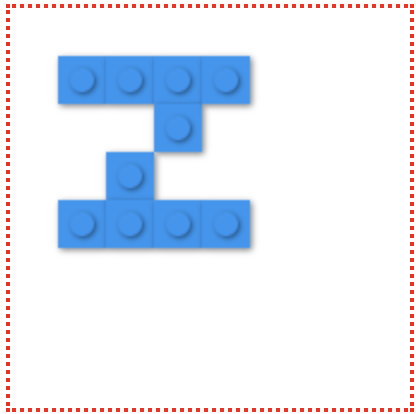
    <LinearPath />

    Draw a set of lines connecting the specified points. points is an array of arrays of points (x, y).

    prop type default
    points (required) Array[[x1, y1], [x2, y2]…]

    linear

    import Board, { LinearPath } from 'react-legra'
    
    function MyComponent() {
    
      const points = [[1, 1], [4, 1], [1, 4], [4, 4]]
    
      return (
        <Board>
          <LinearPath points={points} />
        </Board>
      )
    }

    <Image />

    Draw an image with Legos!!!

    prop type default
    src (required) String

    image

    import Board, { Image } from 'react-legra'
    
    function MyComponent() {
    
      return (
        <Board>
          <Image src="/spong.jpg" bs={8} />
        </Board>
    }

    <Circle />

    Draw a circle from the center point and with the given radius

    prop type default
    center (required) Array[xc, yc]
    radius Integer 10

    circle

    import Board, { Circle } from 'react-legra'
    
    function MyComponent() {
    
      return (
        <Board>
          <Circle center={[3, 3]} radius={2} />
        </Board>
      )
    }

    <Ellipse />

    Draw an ellipse from the center point and the horizontal and vertical axis lenght controlled by hAxis and vAxis props

    prop type default
    center (required) Array[xc, yc]
    hAxis Integer null
    vAxis Integer null

    ellipse

    import Board, { Ellipse } from 'react-legra'
    
    function MyComponent() {
    
      return (
        <Board>
          <Ellipse center={[3, 3]} vAxis={2} hAxis={3} />
        </Board>
    }

    <Arc />

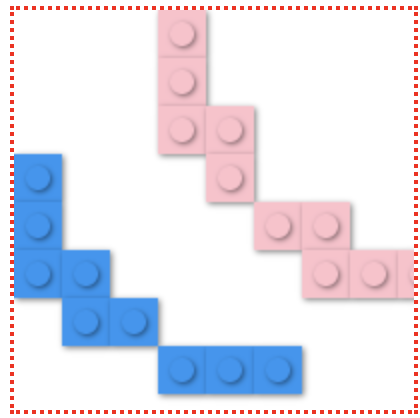
    arc

    An arc is just a section of an ellipse controlled by the additional start and stop props which represent the angle of the arc, also you can “close” the arc form by these 2 points with the filled prop set to true

    prop type default
    center (required) Array[xc, yc]
    hAxis Integer null
    vAxis Integer null
    start Integer null
    stop Integer null
    filled Boolean false
    import Board, { Ellipse } from 'react-legra'
    
    function MyComponent() {
    
      return (
        <Board>
          <Board.Arc center={[5, 3]} vAxis={4} hAxis={5} start={Math.PI} stop={Math.PI * .5} />
          <Board.Arc
            center={[8, 0]}
            options={{ color: 'pink'}}
            vAxis={5}
            hAxis={5}
            start={Math.PI}
            stop={-Math.PI * .5} />
        </Board>
    }

    <Polygon />

    Draw a polygon with the given vertices

    prop type default
    vertices (required) Array[[]]

    polygon

    import Board, { Polygon } from 'react-legra'
    
    function MyComponent() {
    
      const vertices = [
        [0, 0],
        [0, 7],
        [7, 0],
        [7, 7]
     ]
    
      return (
        <Board>
          <Polygon vertices={vertices} options={{ color: 'yellow' }} />
        </Board>
    }

    <BezierCurve />

    Draws a bézier curve from (x1, y1) to (x2, y2) with (cp1x, cp1y) and (cp2x, cp2y) as the curve’s control points.

    prop type default
    from (required) Array[x1, y1]
    to (required) Array[x2, y2]
    controlPointX (required) Array[x1, y1]
    controlPointY (required) Array[x2, y2]

    blizercurve

    import Board, { BeziearCurve } from 'react-legra'
    
    function MyComponent() {
    
      return (
        <Board>
          <BezierCurve from={[3, 3]} to={[22, 14]} controlPointX={[8, 30]} controlPointX={[18, 1]} />
        </Board>
    }

    <QuadraticCurve />

    Draws a quadratic curve from (x1, y1) to (x2, y2) with (cpx, cpy) as the curve’s control point.

    prop type default
    from (required) Array[x1, y1]
    to (required) Array[x2, y2]
    controlPoint (required) Array[x1, y1, x2, y2]

    quadraticcurve

    import Board, { QuadraticCurve } from 'react-legra'
    
    function MyComponent() {
    
      return (
        <Board>
          <QuadraticCurve from={[3, 3]} to={[22, 14]} controlPoint={[8, 30, 18, 1]} />
        </Board>
    }

    Development

    You’ll need run two process (2 tabs) for development:

    1.- Watch files and compile them to dist/, run on root directory

    npm start // Watch and Compile files changes

    2.- Run the example

    cd example
    npm start // Run the demo app

    After that each change you do will be reflected on the demo app

    Contributors

    License

    MIT © christo-pr

    Visit original content creator repository
  • FoxNap

    Fox Nap 🦊

    server + client mod mod loader: fabric lint status mod build status RPG build status supported versions Modrinth Downloads

    A Survival-, Multiplayer- and Copyright-friendly mod for adding custom music to Minecraft

    foxnap-banner

    Requires Fabric

    What is This?

    FoxNap is a simple “Vanilla Plus” mod for adding custom music discs to Minecraft.

    FoxNap also adds custom musical instruments that you can play like goat horns, giving you the creative freedom to stage “live music” performances.

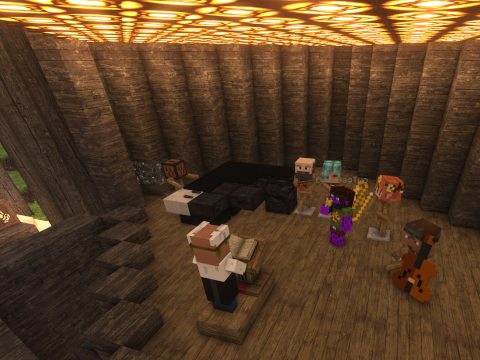
    The Armor Stand Ensemble

    Setup and Customization

    This mod comes pre-bundled with seven new music discs:

    1. “Colors,” by Tobu
    2. Camille Saint-Saëns: “Danse Macabre,” performed by Kevin MacLeod
    1. Nikokai Rimsky-Korsakov: “Flight of the Bumblebee” from Tsar Saltan, performed by The US Army Band

    all of which are permissively licensed under the terms specified here (I am redistributing them via this repo and mod under the compatible Creative Commons Attribution-ShareAlike 4.0 License).

    If this built-in playlist sounds like your jam, and you have no desire to add anything else, then congrats! This is easy! This is a Fabric mod with builds for 1.19+ and depends only on the Fabric API, so just download the appropriate build to your instance’s mods folder, start the game, and go find a village.

    But if you’re interested in some customization, read on:

    Resource Pack Generator

    While you can always manually convert mp3s and hand-edit JSON files to create a set of Fox Nap packs, this project provides an alternative in the form of a stand-alone and portable (read: no installation or setup required) resource pack generator.

    You can read more about that here.

    What About Multiplayer?

    When playing on a server, it’s the server’s datapacks and config file that will dictate:

    • how long each song will play
    • the redstone signal strength coming out of jukeboxes playing each disc
    • the number of tracks available from the Maestro

    but it’s each player’s resource pack and config file that will control:

    • the songs that each disc will play
    • the appearance (and description) of each disc
    • which discs show up as “placeholder” records

    Explicitly:

    • if the server has a greater number of discs specified than both what you’ve specified in your config, some discs will show up for you with placeholder textures and sound files
    • if you have more discs in your resource pack than are set on the server, then not all tracks will be available in your shared game
    • some music discs may continue silently after a song ends, and some might cut off

    Beyond the number of discs, though, there’s no reason why every player can’t come online with a completely custom playlist of songs with similar lengths!

    Obtaining Records and More!

    So now that you’ve registered these custom records to the game, how do you actually get them? Outside of commands (e.g. /give @s foxnap:track_1) and Creative Mode, the sole way to obtain FoxNap records is by trading with The Maestro, a new villager who has a Jukebox as a job site (note that The Maestro does not currently spawn naturally, but this feature is planned).

    The Maestro

    The Maestro will pay top dollar for tonewood–stripped blocks of rare wood types–goat horns and non-FoxNap records and sells, alongside your custom music discs, a wide variety of playable musical instruments (with textures adopted from the classic mxTune mod).

    Disabling The Maestro

    If you’d prefer not to add The Maestro to your game (and would like to obtain your music discs in some other way, such as a datapack), you can disable this part of the mod by editing your foxnap.yaml config file and adding the following line:

    enable_maestro: false

    Fox Nap Vanilla

    With the release of Minecraft 1.21, music discs are now entirely data-driven! As such, the resource and datapacks generated by the Fox Nap Resource Pack Generator are entirely compatible with the vanilla game. Details can be found on the wiki.

    Contributing

    Find a bug? Have a suggestion or a question? Want to contribute a new feature or enhancement? Open an issue!

    Building the Mod from Source

    1. Clone this repo
    2. Download and install a Java 21 OpenJDK such as Temurin
    3. From the root of this repo, run ./gradlew build or load this project into your favorite Java IDE and run the “build” gradle task

    The compiled jar will be found under build/libs.

    Building the Resource Pack Generator from Source

    Instructions for building the resource pack generator can be found on the wiki

    License and Acknowledgements

    All code in this repository is licensed under GPLv3.

    Builds of the FoxNap Resource Pack Generator (FoxNapRPG) include binaries of ffmpeg which is licensed under the GNU Lesser General Public License (LGPL) version 2.1 or later and incorporates components licensed under the GNU General Public License (GPL) version 2 or later.

    All assets in this repository are distributed under the Creative Commons Attribution-ShareAlike 4.0 License unless otherwise stated.

    Instrument icons are taken from the mod mxTune by @AeronicaMC.

    Instrument sounds are courtesy of Philharmonia‘s sound sample library.

    Many thanks to @FoundationGames for making the code of his awesome Sandwichable mod so easy to understand and learn from, and similarly to Modding by Kaupenjoe for his awesome and detailed tutorials on Minecraft modding, in this case his tutorial for adding a custom villager profession.

    Also shouting out @Siphalor and Reddit’s jSdCool for this conversation on adding non-mod external libraries to a Fabric mod. It should not have been this hard to add the SnakeYAML library to a mod.

    Visit original content creator repository
  • revu-cli

    Logo

    revu is a comprehensive command-line tool designed to streamline the code review process. Leveraging the advanced capabilities of GPT-4 and the GitHub API, it can analyze and provide insightful reviews on pull requests, local changes, and individual files. Additionally, revu offers an intuitive commit message generator that uses local diffs and commit history to propose appropriate commit messages. Its flexible nature aims to cover various aspects of code review, offering an efficient toolset for developers.

    ⚠️ Disclaimer: This is a test project. The reviews generated by this tool may not always be accurate, useful, or make sense. Always perform manual code reviews to ensure the quality of your code.

    Getting Started

    Prerequisites

    • You’ll need to have Node.js and npm installed on your machine.
    • An OpenAI API key for using GPT-4 and a GitHub token for accessing the GitHub API.

    Switching to GPT-4 Model

    revu is initially set to use the GPT-3.5-turbo model. If you wish to switch to GPT-4, you can do so by modifying your revu.json config file:

    1. Run the config command if you haven’t done so already. This will generate the revu.json config file:
    revu config
    1. Locate your revu.json config file. By default, it is saved in the .revu directory in your home directory (~/.revu).
    2. Find the llm section and then the openai subsection within it.
    3. Change the value of openaiModel from gpt-3.5-turbo to gpt-4.
    4. Save and close your revu.json config file.

    Remember that using GPT-4 may result in increased API costs. Please refer to OpenAI’s pricing for more information.

    Installation

    You can install revu globally using npm by running the following command:

    npm i -g revu-cli

    Alternatively, you can clone the repository and install the dependencies locally:

    1. Clone the repository:
    git clone https://github.com/phmz/revu-cli.git
    1. Navigate to the project directory:
    cd revu-cli
    1. Install dependencies:
    npm install
    1. Build the project:
    npm run build

    Usage

    Before using revu, you need to set up the configuration with your OpenAI API key and GitHub token. You can do this with the following command:

    revu config

    This will prompt you to enter your OpenAI API key and GitHub token.

    For a comprehensive list of all available commands and options in revu, run the help command:

    revu help

    This will display a list of all the available commands, their descriptions, and options you can use with revu.

    Environment Variables

    revu can also be configured using environment variables. If an environment variable is not provided, revu will use the default value.

    Here are the available environment variables:

    • GIT_MAX_COMMIT_HISTORY: Maximum number of commit history entries to fetch (default: 10).
    • GIT_IGNORE_PATTERNS: A comma-separated list of regular expression patterns of files to ignore (default: []).
    • GITHUB_API_URL: Custom URL for the GitHub API (default: https://api.github.com).
    • GITHUB_TOKEN: GitHub personal access token.
    • OPENAI_API_URL: Custom URL for the OpenAI API (default: https://api.openai.com).
    • OPENAI_API_KEY: OpenAI API key for accessing the OpenAI API.
    • OPENAI_MODEL: OpenAI model to use (default: gpt-3.5-turbo).
    • OPENAI_TEMPERATURE: Temperature parameter for OpenAI model (default: 0).

    Local Code Review

    revu can analyze local changes in two ways:

    1. Analyzing all local changes

    If you want to analyze your local changes, navigate to the root directory of your local Git repository and run the following command:

    revu local

    revu will then analyze your local changes and provide you with a review.

    2. Analyzing a specific file

    If you want to analyze a specific file in your local directory, navigate to the root directory of your local Git repository and run the following command:

    revu local --directory <directory> --filename <filename>

    Replace <directory> with the relative path of the directory to search and <filename> with the name of the file to review.

    Generate Commit Message

    revu can propose commit messages based on local diffs and commit history. To use this feature, run the following command:

    revu commit

    revu will prompt you to select the files you wish to commit. Once the files are selected, revu fetches the commit history and proposes a commit message. If you agree with the suggested commit message, you can proceed to commit your changes right away. If there are unselected files left, revu will ask you if you wish to continue the commit process.

    Pull Request Review

    If you want to analyze a pull request, run the following command:

    revu pr <repository> <pull_request_number>

    Replace <repository> with the repository to review in the format owner/repository, and <pull_request_number> with the number of the pull request to review. For example:

    revu pr phmz/revu 42

    revu will then fetch the pull request details, analyze the changes, and provide you with a review.

    Ignoring Files

    The revu CLI tool allows you to ignore certain files during your review process by using regular expression patterns. You can define these patterns either through a configuration file or via an environment variable. The CLI tool will ignore files that match any of the provided patterns.

    Via Configuration File

    You can define an array of ignorePatterns under the git section in your revu.json configuration file, like so:

    {
      "git": {
        "ignorePatterns": [".*lock.*", "another_pattern", "..."]
      }
    }

    Via Environment Variable

    Alternatively, you can use the GIT_IGNORE_PATTERNS environment variable to define a comma-separated list of regular expression patterns:

    export GIT_IGNORE_PATTERNS=.*lock.*,another_pattern,...

    Pipeline Integration

    revu can be seamlessly integrated into your GitHub pipeline. This allows automatic code review for every commit in a pull request with the review results posted as a comment on the PR. Detailed instructions on how to set up this integration can be found in the pipeline integration guide.

    Development

    revu is built with TypeScript. Contributions are welcome!

    Code style

    This project uses ESLint for linting.

    You can run the linter with:

    npm run lint

    Visit original content creator repository